Hotel metasearch marketing
Win back your direct bookings from OTAs with Metasearch
Metasearch is one of the most effective channels for increasing direct bookings for accommodation providers. Roomstay feeds your live rates to metasearch platforms so your property is present when travellers are ready to book.
Your Hotel Name
4.6 ★
City centre · 2 guests · 2 nights
Official site
Best rate · Free breakfast
A$219
Booking.com
A$234
Expedia
A$241
Agoda
A$246
Illustrative example. Your live booking engine rate, shown where guests compare prices.
Why metasearch
Reach travellers at the moment they decide
60%+
of hotel booking decisions worldwide are influenced by metasearch
Ready to book
Travellers on metasearch have dates in mind and are comparing final prices.
Side by side with OTAs
Your direct rate sits next to Booking.com and Expedia, where guests can see it.
One click to your site
Guests go straight to your booking engine, with no OTA commission to pay.
Metasearch channels
Visibility across every major metasearch channel
We connect your Roomstay rates and availability to the platforms your guests actually use, and run each one to its own strengths.

Hotel Ads




What is hotel metasearch?
Guests compare prices before they book. Make sure your direct rate is in the line-up.
Metasearch engines such as Google Hotels, Trivago and Tripadvisor show travellers every available price for a hotel side by side: your website alongside Booking.com, Expedia and other OTAs. When your official site isn’t listed, the booking goes to an OTA and you pay commission for a booking you should have owned.
✓
Visible where guests compare
✓
You get the click, not the OTA
✓
The booking lands direct
✓
An efficient return on ad spend
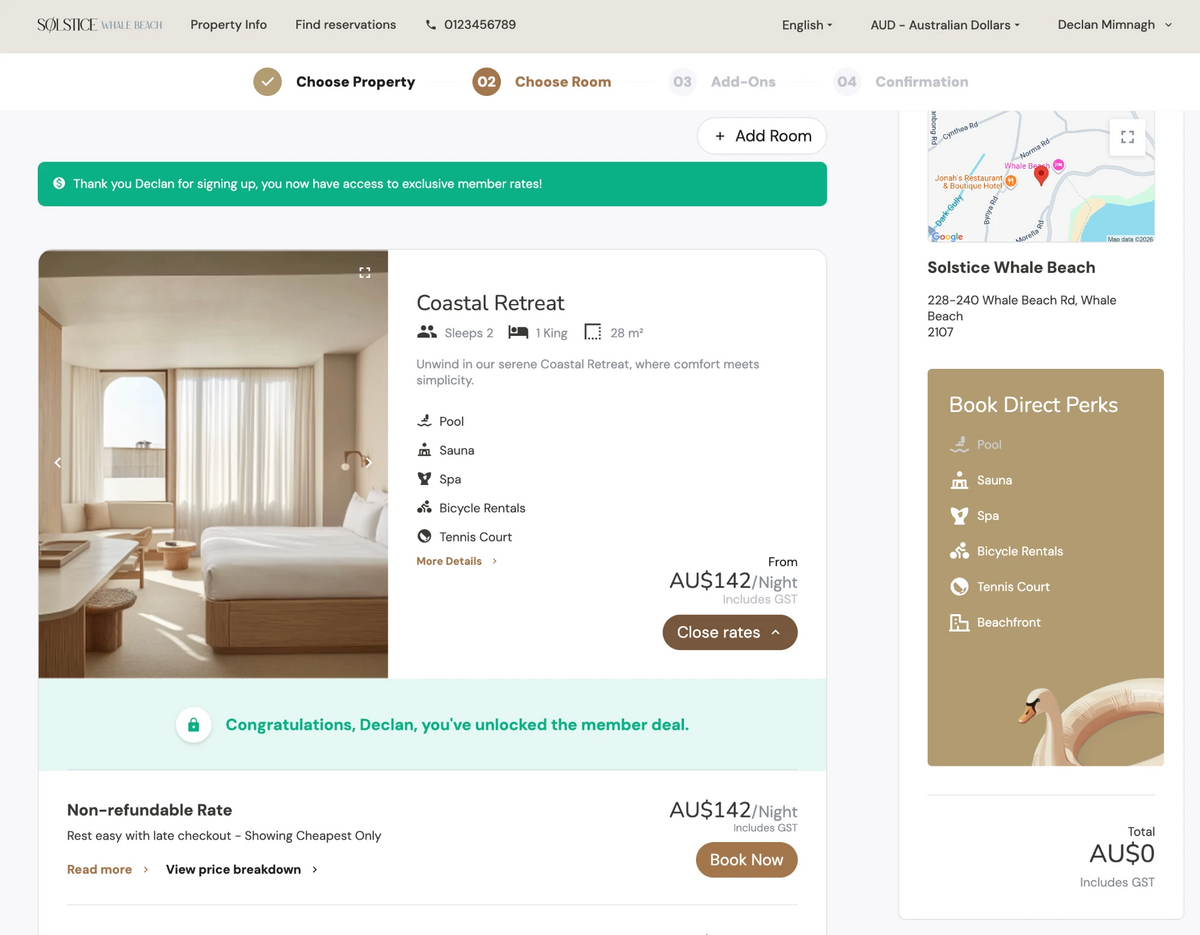
The Roomstay booking engine: the live rates and member deals your metasearch clicks land on.
How metasearch works
Roomstay increases your direct bookings in four steps
1
Audit & strategy
We review your rate parity, current visibility and OTA mix, then recommend the channels and bidding model that fit your property.
2
Connect your rates
We send live rates and availability to each channel, with conversion tracking set up from day one.
3
Launch & optimise
Campaigns go live and our specialists adjust bids by market, device, length of stay and booking window, every week.
4
Live dashboard reporting
View your metasearch performance anytime in a live dashboard: spend, clicks, bookings, revenue and return on ad spend, across every channel in one place.
Roomstay metasearch solutions
Flexible solutions to suit your property
We manage all performance and reporting, whichever solution you choose.
For properties with a set monthly budget
Ad budget plus management retainer
You set a media budget which runs on cost-per-click bidding, with a monthly retainer for management. We use return on ad spend or cost of sale as your north star KPI.
No risk for property owners
Pay per stay commission
Roomstay fronts the ad spend and you only pay a commission when a guest completes their stay. Cancellations cost you nothing.
Why Roomstay
Your booking engine and metasearch, working as one
Increase direct bookings
Combine metasearch with Roomstay’s Google Ads, paid social, SEO and AI search services for one holistic direct booking strategy.
Live rates from Roomstay
Rates flow straight from the Roomstay booking engine, so what guests see on metasearch matches what they pay on your site.
Work with metasearch experts
Our specialists have a deep understanding of pricing and the metasearch channel, optimising your campaigns for maximum efficiency.
Rate parity guidance
We flag when OTAs undercut your direct rate, because winning on metasearch starts with a price guests want to click.
Transparent reporting dashboard
Your live dashboard is available anytime, so you can view campaign performance, CPCs, bookings, revenue and return on ad spend, all in one place.
Built for every property type
Independent hotels, hotel groups, apartments, holiday parks and resorts: campaigns optimised around how each property sells.
Metasearch case study
A$165,639 in direct revenue for Wildlife Retreat at Taronga in nine months
Roomstay launched Wildlife Retreat at Taronga Zoo Sydney on metasearch, feeding its live rates and availability so its official site appeared alongside the OTAs wherever travellers compared prices.
We scaled across three channels: Google Hotel Ads, Tripadvisor and Trivago. Our specialists optimised bids and budgets month by month to keep spend efficient, with every booking and dollar of revenue tracked in a live dashboard.
A$165,639
metasearch direct revenue, January to September 2026
A$18,404
average direct revenue generated per month
Limited time offer
Get your first month of metasearch management free
We’ll start by showing you where your property appears today, how your direct rate compares with the OTAs, and the direct revenue you could be winning.
✓
Visibility check across metasearch platforms
✓
Rate parity snapshot against the OTAs
✓
Recommended channels and bidding model
No obligation. We’ll be in touch within one business day.
Claim your free month
Metasearch FAQs
Hotel metasearch questions, answered
What is hotel metasearch marketing?
Hotel metasearch marketing is advertising your direct room rates on price comparison sites such as Google Hotels, Trivago and Tripadvisor. When a traveller compares prices, your official website appears alongside the OTAs, and a click takes them straight to your booking engine.
How is metasearch different from an OTA?
An OTA such as Booking.com or Expedia sells your rooms and charges commission on each booking. A metasearch engine compares prices from many sellers, including your own website, and sends the guest to book directly. You keep the guest relationship and typically pay far less per booking.
Which metasearch channels does Roomstay manage?
We manage Google Hotel Ads (including free and paid booking links), Trivago, Tripadvisor, Skyscanner and more.
How much does metasearch advertising cost?
Roomstay offers two solutions. With an ad budget plus management retainer, you set a media budget that’s spent on cost-per-click bidding, plus a monthly retainer to Roomstay for managing the campaigns. With pay per stay, Roomstay fronts the advertising budget and you pay a percentage of booking value only after the guest has completed their stay.
Do I need rate parity to succeed on metasearch?
Rate parity is crucial to succeeding on metasearch. If OTAs show a lower price than your website, guests are less likely to click your link and convert. We review your parity during onboarding and advise on how to protect your direct rate.
How long does it take to go live?
Metasearch requires a live feed of your booking rates, so we connect to your rates before going live. Setup varies from property to property and can take two to four weeks, depending on your technical setup, PMS and booking engine. Contact us for a detailed timeline for your property.
Do I have to use the Roomstay booking engine?
No, you don’t have to use the Roomstay booking engine to run metasearch, but we do recommend pairing them, as our booking engine has been designed to increase direct booking conversion. Roomstay also reports all your direct bookings in one dashboard alongside your metasearch performance.
How will I know metasearch is working?
You’ll receive a live dashboard where you can review ad spend, clicks, bookings, revenue and return on ad spend at any time, so you can see exactly how metasearch is performing for your property.
Put your direct rate back in the line-up
Try Roomstay’s managed metasearch free for your first month, with every channel reported in one live dashboard.
Get your first month free
Prefer to talk it through? Book a demo →
